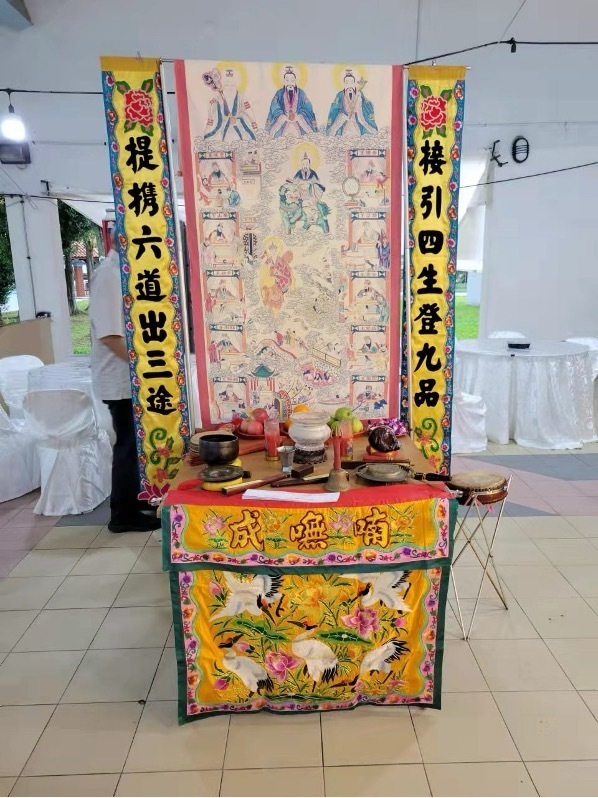
Taoist funeral rituals in Singapore
A source-based overview of documented wake, funeral and post-funeral practices. The appointed practitioner should confirm which rites apply to the family.
What the research establishes
There is no single universal sequence.
National Heritage Board-supported research records differences between dialect groups, family practices and contemporary adaptations. Taoist priests, family members and funeral directors hold different parts of this practical knowledge.
- Dialect groupHokkien, Teochew, Cantonese, Hakka and other traditions may differ.
- PractitionerThe appointed priest or ritual specialist sets the applicable rites and sequence.
- FamilyParticipation, offerings and post-funeral observances should be confirmed rather than assumed.
Documented practices
What may take place
These are examples recorded in Singapore. They are not a required checklist for every Taoist funeral.
- 1
Opening the way
The Cantonese practice known as 开路 calls the deceased to attend the wake and symbolically opens the route onward. The documentation notes that the associated notices and ritual objects are not used in the same way by every dialect group.
Research record: 开路 - 2
Altar and daily offerings
Documented wake arrangements include food placed before the coffin and, in some families, washing and grooming items. Current practice may use food preferred by the deceased and is less rigid than older forms.
Research record: altar arrangements - 3
Scripture and salvation rites
Research interviews describe ritual specialists opening the altar, invoking the relevant deities and chanting selected scriptures. The rites and texts depend on the practitioner, the family and what is being conducted.
Research record: salvation rites - 4
Final rites before cremation or burial
A ritual specialist may conduct final prayers before the coffin proceeds for cremation or burial. The administrative process and facility requirements remain governed separately by Singapore authorities.
Research record: final rites
A specific example
Hell-breaking is not a standard rite for every family.
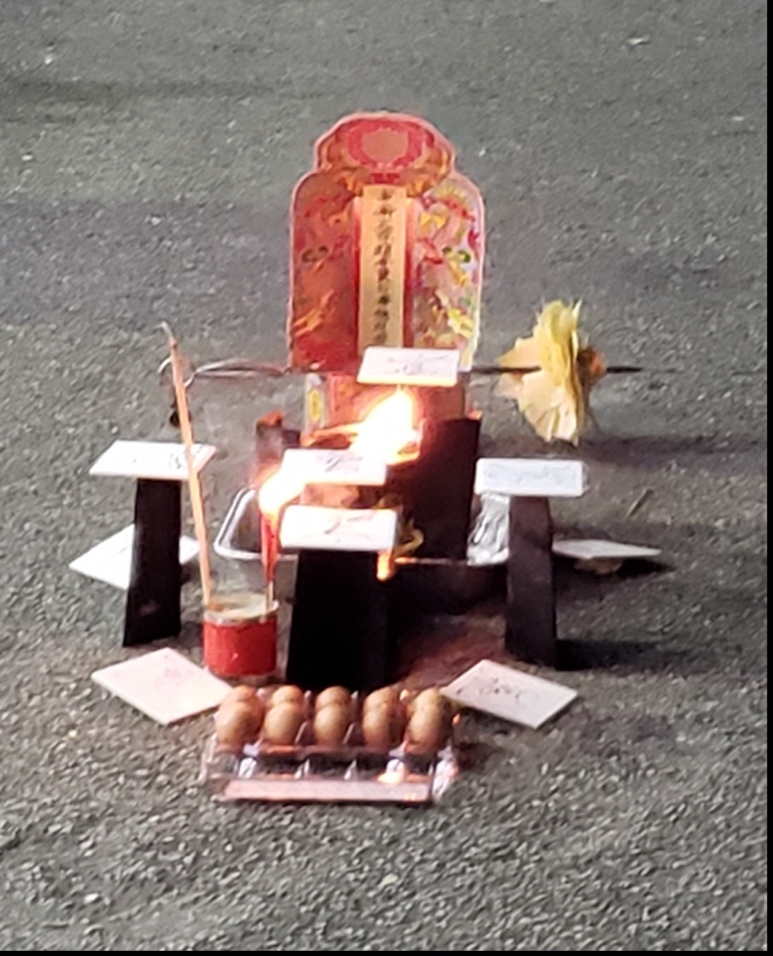
The research project documents versions of 破地狱 and related fire rites among Cantonese and Hakka communities. It also records that these rites are now less common because of practitioner knowledge, age and the limits of modern wake spaces.
Research record: hell-breaking ritesBefore the wake
Confirm these points with the appointed practitioner
- Which Taoist tradition and dialect-group practices apply.
- Which rites will be conducted, on which day and in what order.
- Who in the family is expected to participate.
- Which altar items, clothing, offerings and ritual objects are required.
- What will happen before cremation or burial.
- Whether any post-funeral observances apply.
Sources
Research and official guidance
Checked 15 July 2026. Source wording has been condensed; ritual requirements have not been inferred beyond the cited records.
Record what is known.
The service enquiry leaves ritual details open until the appointed practitioner confirms them.